
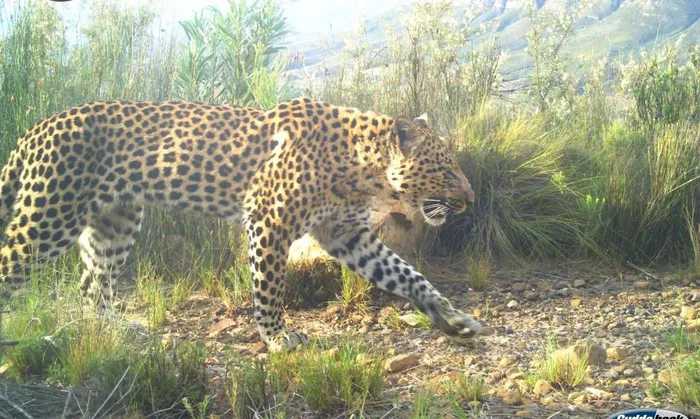
A leopard was captured on camera on Saturday, August 2 this year.
Image: Cape Leopard Trust
The Cape Leopard Trust (CLT) has released early findings from its latest large-scale leopard population survey in the Boland Mountain Complex (BMC), revealing rich biodiversity across the region while also raising concerns about increasing illegal activity in protected mountain areas.
The survey, conducted between May and September 2025, covered roughly 2 500km² of rugged landscape from Bainskloof in the north to the Kogelberg coast in the south, including parts of the Cape Winelands and Kogelberg Biosphere Reserves. Ninety paired camera-trap stations were deployed across CapeNature reserves, City of Cape Town nature areas, state-owned land, and 29 private properties.
That was the CLT’s third major survey in the Boland, following earlier studies in 2010–2012 and 2020, which together form part of the trust’s long-term monitoring programme aimed at tracking leopard population trends.
This year, more than 190 000 images were uploaded to the CLT’s WildID analysis platform, with 22 wild mammal species identified so far, including Cape fox, bat-eared fox, African striped weasel, striped polecat, and grey rhebuck. Several bird species were also recorded.
Leopards appeared at 72% of the camera-trap stations, with 647 leopard photographs captured during the five-month period. Using pattern-recognition software and observer confirmation by eye, the CLT has so far identified 38 individual leopards - 22 males, 11 females, and five of unknown sex. At least two of the females were documented with cubs.
Some of these leopards, including the long-monitored female known as “Stella,” have been recorded for more than a decade, partly due to contributions from private landowners who submit camera-trap data to the CLT’s citizen-science portal.
"This indicates that individual leopards remain in the same area for a relatively long period – an encouraging result. It underscores the value of citizen scientists contributing their monitoring records," CLT stated.
Field teams encountered setbacks during the 2025 project. Flood-damaged roads forced researchers to embark on strenuous hikes of up to 25km to reach some camera sites. More worrying, however, was the theft of equipment at eight camera stations in remote mountain locations.
According to the CLT, 16 cameras were stolen, and these devices were taken in areas known for illegal hunting with dogs, plant harvesting, and snaring. Beyond the financial loss, the trust said these thefts resulted in the loss of important data needed to monitor leopard presence.
"The loss of these camera traps is obviously a massive financial burden to the CLT, but even more frustrating is the loss of data from these sites where we were meant to be monitoring leopard presence," the organisation stated.
Once all data processing is complete, the trust will run statistical models to estimate the current leopard density and compare it with previous years.
As part of the survey period, the CLT Education team visited seven local schools, presenting 42 environmental lessons to more than 1 800 pupils. A CLT field researcher also joined sessions to share photographs from the camera traps and speak about careers in conservation.
The CLT expressed gratitude to its funders and partners.
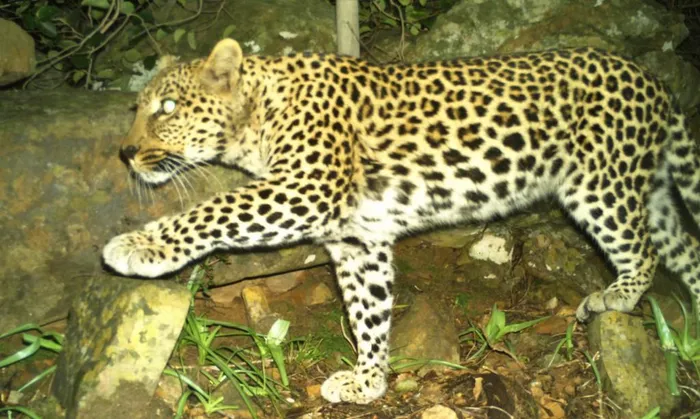
A leopard was captured on camera on the afternoon of Monday, June 9.
Image: Cape Leopard Trust