Empowering Wellington School of Skills pupils with new scooters for job access
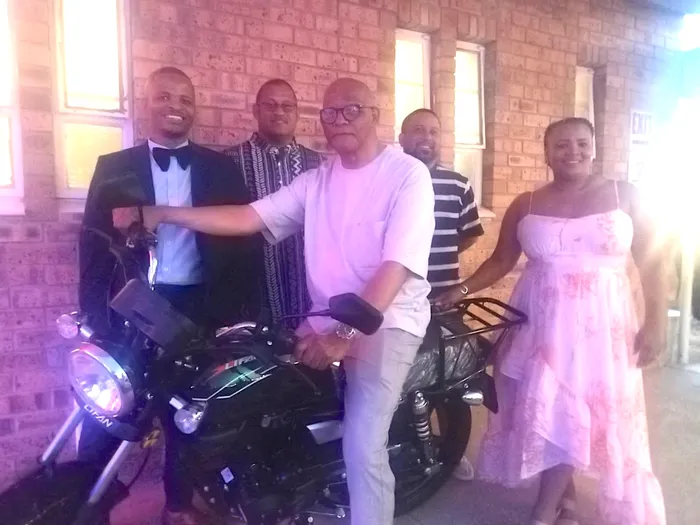
Wellington School of Skills announced its learner scooter project last week. Back from left are Sinalo Zakade (Tourvest), Wayne George (workshop coordinator) and Xen de Jongh (volunteer). In front are Graham Cupido (principal) and Ingrid Philander (hairdressing teacher).
Image: Alicia English
Christmas came early for pupils of Wellington School of Skills last week when their school received its first scooter to help pupils with no transport get to future workplaces.
The school unveiled the scooter at a recent Thanksgiving dinner in honour of its partners and sponsors. The dinner was prepared by the school’s hospitality pupils under the supervision of teachers.
Guests included local role models, home affairs officials who assisted pupils with getting their IDs, and business people who offered them internships.
Former Springbok coach Pieter de Villiers was among the guests at the Thanksgiving dinner. Mr De Villiers emphasised the need to create more opportunities for empowerment for pupils of Wellington School of Skills.
“As a society, we need to shift our focus from competing against each other to working together to create more opportunities for learners with disabilities,” he said.
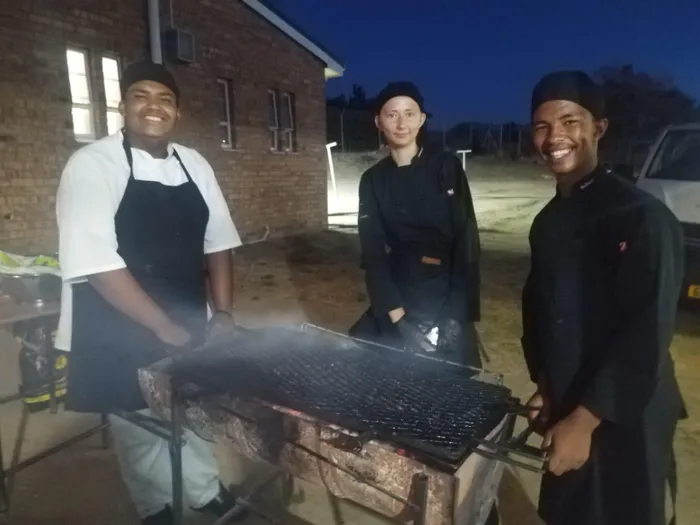
From left, third-year hospitality pupils Peter-John Manuel, Zeldiaan Boyder, and Reathan Matthyse were masters of the grill at Wellington School of Skill’s Thanksgiving dinner for sponsors last week.
Image: Alicia English
Wellington School of Skills principal Graham Cupido thanked the school's partners and sponsors for their continued support during the year.
He said their support of the school demonstrated to pupils that their lives matter.
“We find that our learners are often frustrated because of their learning disabilities. They are very anxious when they come here.
“Some of them go through life with low self-esteem as a result of their learning disability. There are many cases where not even a school like ours can change that.
“They feel different, and most of the times they don’t feel appreciated. Not only at school, but at church, the mosque, among their peers, and on the sports field.
“All they want is for people to value them, recognise their worth, appreciate them for who they are. And to show it through respect, effort and attention.
“You are here because of what you do for our kids,” he said.
Many pupils at Wellington School of Skills rely solely on the school transport as they live in far-outlying farm areas. When they receive internship opportunities or jobs after leaving school, many often struggle to get to work.
“We have an internship programme. One of the sad things is that after their internship, some of the kids will find it very difficult to go and find work, simply because of where they live.
“And especially those who stay on farms very far from the city, here where there are no taxis and Ubers.
“Last year and the year before, we noticed that some of these kids hike early in the morning to work and late in the afternoon. This is especially challenging during winter when it’s dark and more dangerous to hike,” Mr Cupido said.
Mr Cupido said the school reached out to one of its sponsors to fund solutions to pupil's transport challenge.
“Everything we do here will mean nothing if we don’t assist the learners. We spoke to Tourvest, and they helped us. We bought our first scooter, and there are many more to come.
“The company donated close to R300 000 to the school in 2024, which went towards learners in food studies. This year, they gave us almost R280 000, and we had the opportunity to send our kids to the International Hotel School,” he said.
The school plans to organise motorcycle driving lessons and licences for learners. Licensing tests will be conducted orally to accommodate learners’ learning disabilities.
“We will then donate a scooter to learners and make it possible for them to travel to work and home,” Mr Cupido added.
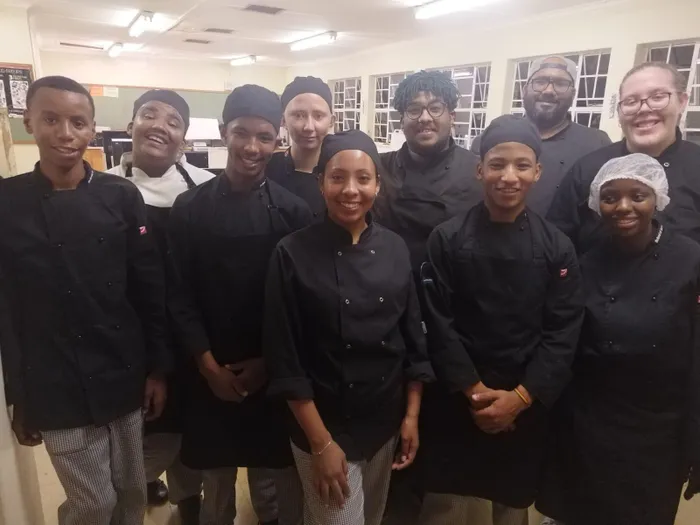
Pictured here are some of Wellington School of Skills' hospitality learners and their teachers.
Image: Alicia English
Third-year hospitality pupil Elizabeth Dreyer has big dreams of working as a chef in restaurants around the world one day.
“I didn’t think of becoming a chef at first. Being at the school has helped me realise that there are opportunities in hospitality. I hope to one day work on boats, open my own restaurant, and experience different cuisines,” she said.
Hospitality teacher Tarryn Windvogel said the certified training pupils received at the International Hotel School will increase their chances of landing jobs after school.
“When they leave school, they will be certified baristas, first aiders, waiters, and bartenders. All this will make them more employable.
“This gives them an extra boost to demonstrate to restaurants and chefs out there that they are competent, although they might not be able to read or write that well,” she said.
Ms Windvogel said giving pupils access to scooters will go a long way towards ensuring they don’t miss or drop out of job opportunities.
“Our learners may have learning difficulties, but they are very good at what they do. Once we show them how to do things with their hands, they will do it.
“Some of them have learning disabilities, but many of them have trauma because of really bad experiences earlier on in their young lives.
“The last six months of their fourth year, learners are supposed to go and work. But many of them have the challenge of not having transport or travel money to get to work.
“Having access to the scooters means that they won’t have the problem of dropping out,” she said.
In honour of Mr Cupido, who retires next year, the school is exploring possibilities of introducing “Zippy with Kieppie,” an idea where motor mechanics learners can do callouts to diagnose vehicles off-site and other render other off-site services.
Tourvest’s Sinalo Zakade said the Wellington School of Skills is close to the company’s “heart” because of its work with learners with disabilities.
“What we see in this school is greater than anything that we ever contributed to. What we are doing is not about the money. It is about the learner.
“We have to grow the learner to be able to work and do [things]. So if he can’t read or write, then he can practice through practicals. Our job is to enable that and to aid it,” he said.
Mr Zakade said he called on more businesses to support the school. “It doesn’t take just us. It takes the country.
“Inclusivity is very important. Just because someone is disabled, that doesn’t mean that they cannot do [anything].
“If a person cannot see properly, then put them in a room that doesn’t have too much light.
"[Let’s] encourage everybody to stand together and to use every platform and influence to make a change,” he said.