Study finds early grade repetition can boost academic performance
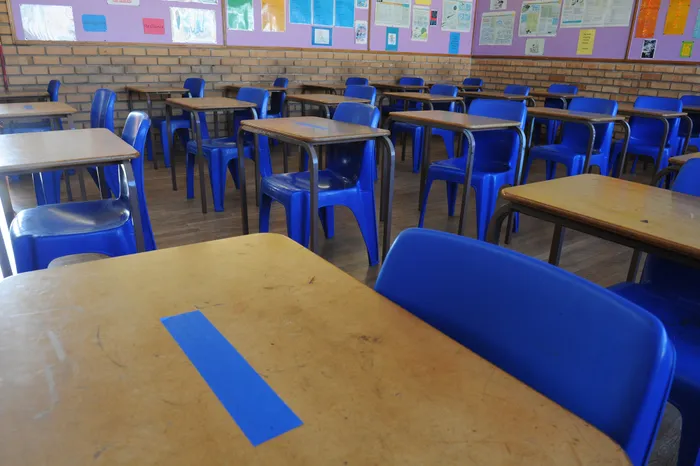
A new study by Stellenbosch University has found that repeating early school grades can lead to significant and lasting academic improvements for learners who struggle to meet promotion requirements, particularly in language literacy.
Image: File: Courtney Africa/ Independent Newspapers
A new study by Stellenbosch University has found that repeating early school grades can lead to significant and lasting academic improvements for pupils who struggle to meet promotion requirements, particularly in language literacy.
The report, authored by Ros Clayton from Stellenbosch University’s Research on Socio-Economic Policy (RESEP) Group, examined the impact of grade repetition in Grade 1 and Grade 4 using data from nearly all primary school pupils across six provinces: the Eastern Cape, Gauteng, KwaZulu-Natal, Limpopo, Mpumalanga and North West.
By comparing pupils who narrowly failed promotion thresholds with those who just passed, the study found that repetition functions as a meaningful form of academic remediation, rather than simply a deterrent to poor performance.
According to the findings, pupils who repeated Grade 1 recorded an average increase of 18.3 percentage points in Home Language marks in Grade 2, with gains remaining statistically significant through to Grade 4. Similar improvements were recorded in mathematics and First Additional Language subjects.
Pupils who repeated Grade 4 also showed strong academic gains, with Home Language marks rising by more than 11 percentage points in Grade 5 and remaining higher than their peers through Grade 7. While the immediate gains from Grade 4 repetition were smaller than those seen in Grade 1, their persistence over time resulted in comparable overall benefits.
Ms Clayton said the results provide clear evidence that early grade repetition improves learning outcomes for learners near promotion thresholds. However, she cautioned against viewing repetition as a blanket solution.
“These are substantial effects, two to four times larger than the impacts of some of the most effective literacy interventions. But magnitude alone does not make repetition the most efficient option.
"A range of proven alternatives, including targeted language support and structured pedagogy programmes can deliver meaningful gains at a lower cost and without requiring an additional year of schooling,” she said.
The study also shed light on gender differences in outcomes. Girls appeared to benefit more than boys from repetition in Grade 1, while Grade 4 repetition produced more equal short-term gains. However, the benefits for boys tended to fade more quickly in later grades.
Despite the positive findings, Ms Clayton warned that South Africa’s already high repetition rates pose significant financial and systemic challenges.
“Previous work suggests that repetition, across all grades, may absorb 8-12% of the annual education budget, amounting to around R28-R40 billion in 2025. The benefits found in this study, therefore, need to be weighed against substantial system-level and individual costs, such as delayed labour-market entry."
She also cautioned that higher repetition rates could worsen overcrowding in classrooms and increase the risk of learner dropout in later grades if not carefully managed.
The report concludes that while early grade repetition can meaningfully improve outcomes for struggling learners, it should be considered alongside cost-effective alternatives to ensure the education system delivers the best possible results for all learners.