Stellenbosch University opens new Immersive Technology Lab
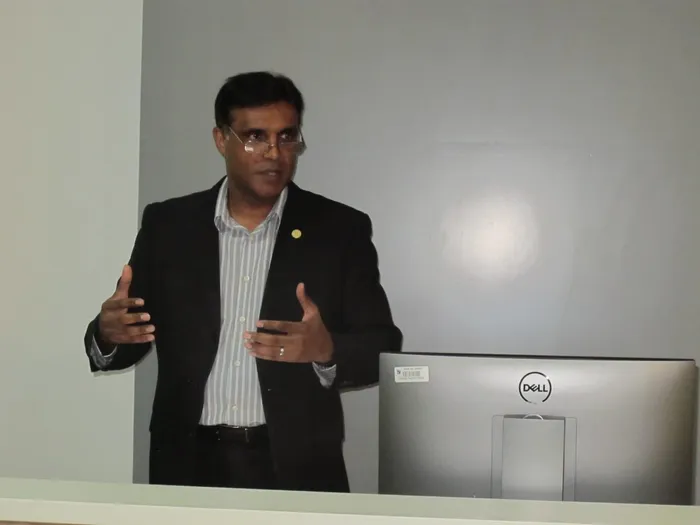
Professor Deresh Ramjugernath, Stellenbosch University's rector and vice-chancellor, addressing attendees during the launch of the Immersive Technology Lab on Tuesday, January 27.
Image: Sibulle Kasa
In an effort to keep pace with developments in data visualisation and immersive learning, Stellenbosch University officially opened its new Immersive Technology Lab at the university's library on Tuesday, January 27.
The high-resolution, 270-degree panoramic facility is located adjacent to the library's Makerspace and designed to support teaching, research, and interdisciplinary innovation through advanced visualisation technologies.
Professor Sibusiso Moyo, the deputy vice-chancellor: research, innovation and postgraduate studies, said the lab was established to transform the university's methods of knowledge creation.
"Across disciplines, we are seeing a significant shift in the nature of research itself, and we are working with datasets. We know that research, teaching, and learning are also not just about producing outputs; one has to be able to interpret and communicate what we find, clearly, responsibly and with depth - that is where immersive technology becomes transformative."
The lab brings together existing data visualisation literacy training, head-mounted display experience services, and new research data visualisation services into a single immersive environment.
According to the university, it will also offer specialised support for data science projects, including machine learning simulations, dashboard creation, and training aligned with best-practice data visualisation.
Professor Deresh Ramjugernath, the rector and vice-chancellor, said the facility is important as higher education is evolving rapidly.
"More and more questions are being asked about how relevant our universities are to developing people for the real world. In this context, you cannot rely only on traditional approaches to teaching and learning. We must expand what is possible, and we must do it with purpose. This immersive lab is one of those purposeful investments."
In a statement, the university stated that the primary use of cross-reality technologies such as augmented reality, mixed reality, virtual reality, and extended reality is to enhance data visualisation services for interdisciplinary research.
Staff and students using the lab will be able to experience projects in immersive visual environments, creating simulated experiences for education, research, training, and industry applications.
Examples of practical use include nursing students practising hospital procedures in simulated environments, engineers working within virtual 3D construction models, and climate scientists translating complex greenhouse gas data into visible and understandable data representations.
Find Bolander on TikTok and Instagram @ccmonlineza.
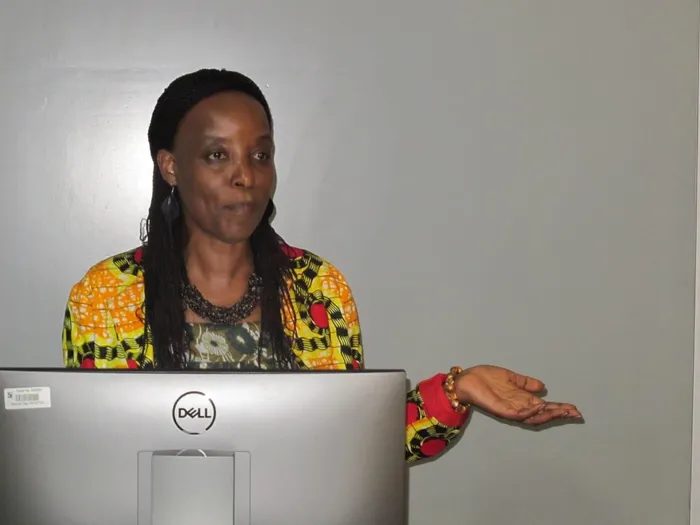
Professor Sibusiso Moyo, the deputy vice-chancellor: research, innovation and postgraduate studies, said the lab was established to expand the university's approaches to knowledge creation.
Image: Sibulele Kasa
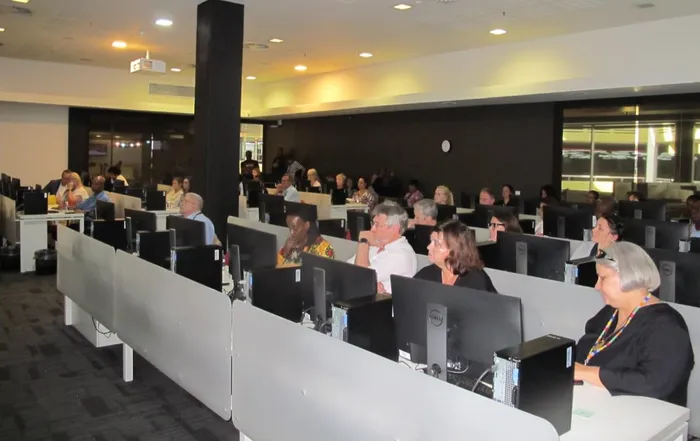
Staff, students and guests who came to witness the official opening of Immersive Technology Lab at the Stellenbosch University.
Image: Sibulele Kasa
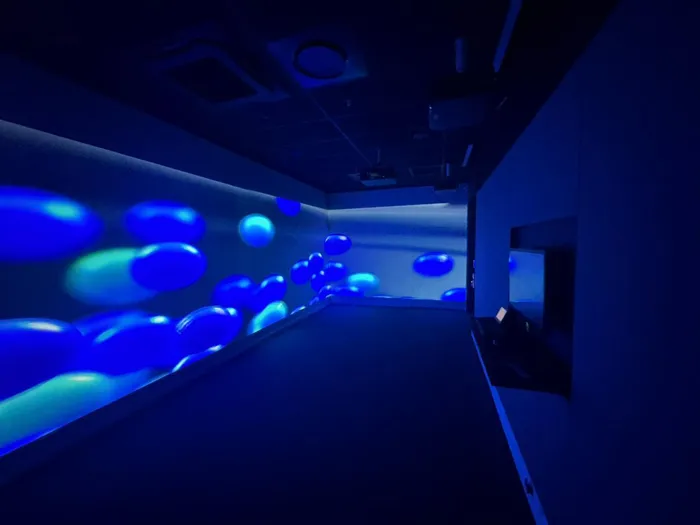
Staff and students using the lab will be able to experience projects in immersive visual environments, creating simulated experiences for education, research, training, and industry applications.
Image: Supplied