Tackling postharvest food waste in South Africa: The urgent call for better storage solutions
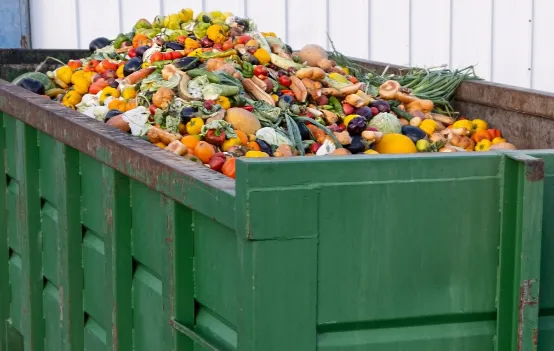
Between 9 124 and 17 969 tonnes of fruits and vegetables are wasted each year in South Africa, equivalent to roughly 450 to 900 fully loaded large trucks, according to a new study.
Image: Supplied
Between 9 124 and 17 969 tonnes of fruits and vegetables are wasted each year in South Africa, equivalent to roughly 450 to 900 fully loaded large trucks, according to a new study.
The losses occur largely at wholesale markets due to postharvest inefficiencies, contributing to food insecurity that affects over 63% of South African households.
The findings come from Dr Ikechukwu Opara, a food systems researcher who recently earned his doctorate in Food Science at Stellenbosch University.
His study focused on postharvest waste at the country’s largest fresh produce market, measuring food losses, identifying financial impacts, and using machine learning models to predict waste patterns.
“The lack of comprehensive data on postharvest waste, particularly at critical points such as wholesale markets, makes it difficult to identify waste hotspots accurately and hinders the development of tailored interventions to reduce waste at specific stages of the food supply chain,” Dr Opara said.
His research identified breaks in the cold chain as a major contributor to waste. Delays in placing produce in optimal storage, combined with limited cold storage infrastructure, especially during the summer months when supply peaks, resulting in significant losses.
Transportation conditions also play a role. Produce moved in unrefrigerated vehicles is exposed to temperatures and humidity levels that accelerate spoilage, leading to weight loss, shrivelling, downgrading, and sometimes complete disposal.
The study highlights the potential for technology to tackle these challenges. Machine learning tools can monitor storage conditions, forecast demand, optimise ordering and selling processes, and even support dynamic pricing models to encourage quicker sales, reducing waste.
Reducing postharvest losses, Dr Opara explained, is not only about food security but also about broader economic and health impacts.
He said losses drive up the cost of fruits and vegetables, disproportionately affecting low-income households, worsening poverty, and widening the gap between the rich and poor in South Africa.
"Addressing and reducing postharvest losses and waste not only enhances food security but also alleviates negative economic impacts,” Dr Opara said.
He hopes his research will pave the way for evidence-based strategies using technology to minimise food waste and enhance South Africa’s food systems.
Find Bolander on TikTok and Instagram @ccmonlineza.

The findings come from Dr Ikechukwu Opara, a food systems researcher who recently earned his doctorate in Food Science at Stellenbosch University.
Image: Supplied