Rare sighting of Antarctic crabeater seal at Strand Beach
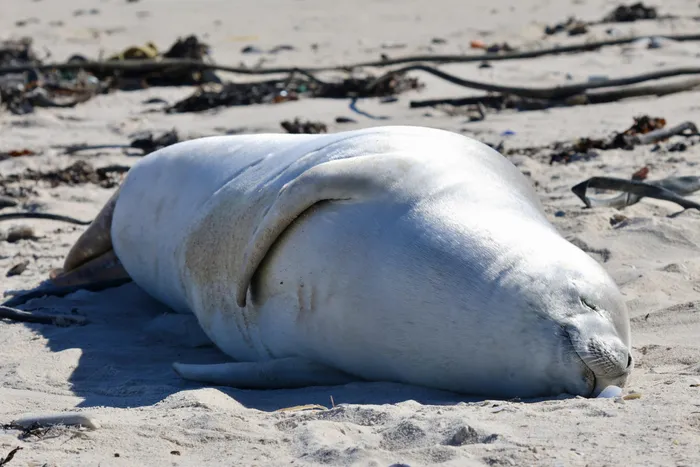
Beachgoers at Strand Beach were treated to an unusual sight on Tuesday, February 17, when a rare Antarctic crabeater seal hauled out along the shoreline, drawing curiosity and resulting in a coordinated wildlife response.
Image: Supplied
Beachgoers at Strand Beach were treated to an unusual sight on Tuesday, February 17, when a rare Antarctic crabeater seal hauled out along the shoreline, drawing curiosity and resulting in a coordinated wildlife response.
The female seal, a species rarely seen in South African waters, was initially sighted near Baden Powell Drive before settling at Strand Beach. Authorities and marine wildlife organisations responded to ensure the safety of both the animal and members of the public.
The seal is believed to have travelled an estimated 4 500km from Antarctica, further than the southern elephant seals that have visited local shores in recent years.
“We are so lucky to have these amazing animals visit our shoreline. We appeal to all members of the public to please leave them alone, respect their space, and view them from a distance. They don’t need help, food, or water. The best we can do for them is give them peace and space,” said Gregg Oelofse, coastal and environmental manager for the City of Cape Town.
Officials cordoned off the area at Strand Beach to provide the seal with adequate space to rest undisturbed. Residents and visitors are encouraged to follow strict guidelines when encountering seals or other marine wildlife:
Remain at least 20 metres away
Stay behind any barriers
Do not pour water over the animal
Keep noise and movement to a minimum
Keep dogs on leashes
A marine wildlife response team, including representatives from the Two Oceans Aquarium Foundation, flipper tagged and vaccinated the seal as a precautionary measure.
Martine Viljoen, marine wildlife manager at the foundation, explained that tagging allows individual seals to be identified over time.
“Flipper tagging provides a unique visual identification, allowing individual seals to be recognised over time. This helps confirm whether repeated sightings involve the same seal rather than different animals, particularly when a seal hauls out at multiple locations along the coastline,” she said.
Experts noted that crabeater seals are not naturally adapted to South African coastal conditions. While there is no immediate concern for this individual, wildlife officials will continue to monitor her behaviour and condition.
The seal was also vaccinated against rabies as part of an ongoing study involving Cape fur seals and other vagrant seal species.
Crabeater seals are native to the Antarctic pack ice. They are rarely seen this far, making the Strand Beach sighting a rare opportunity for residents to observe an extraordinary marine visitor.
Find Bolander on TikTok and Instagram @ccmonlineza.
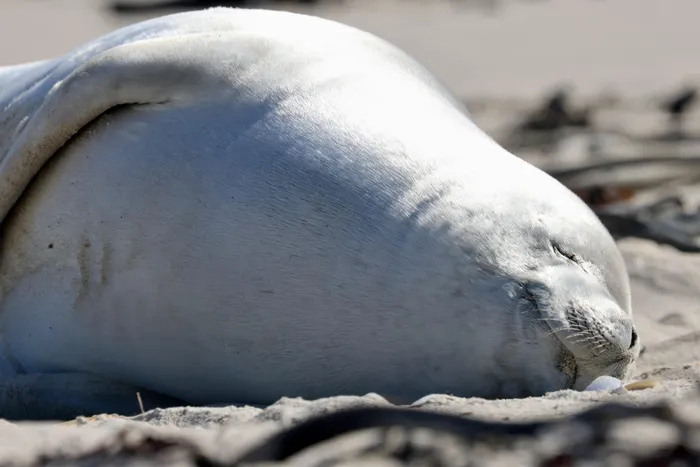
A young female crabeater seal appeared along the Cape shore this week.
Image: Supplied
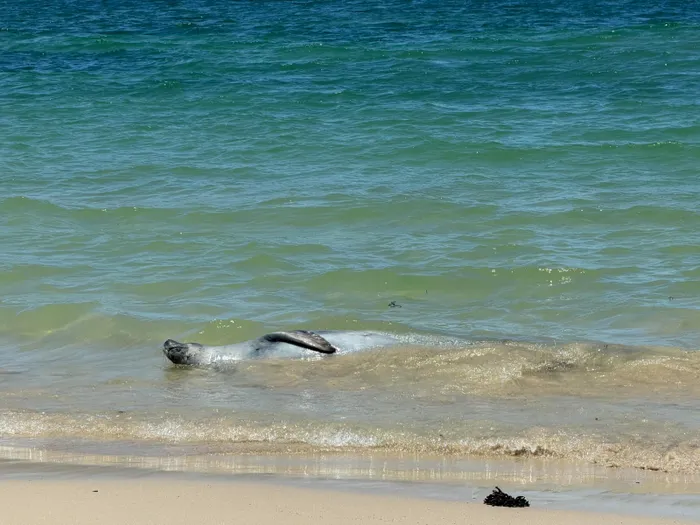
Crabeater seals are native to the Antarctic pack ice. They are rarely seen this far, making the Strand Beach sighting a rare opportunity for residents to observe an extraordinary marine visitor.
Image: Supplied